★★★★★
"Clear information about the work on our dormer. Good communication. A partly less successful result was still repaired perfectly."

A colour on a card is not a colour on your house: you choose against your brick, your roof and the Frisian daylight.
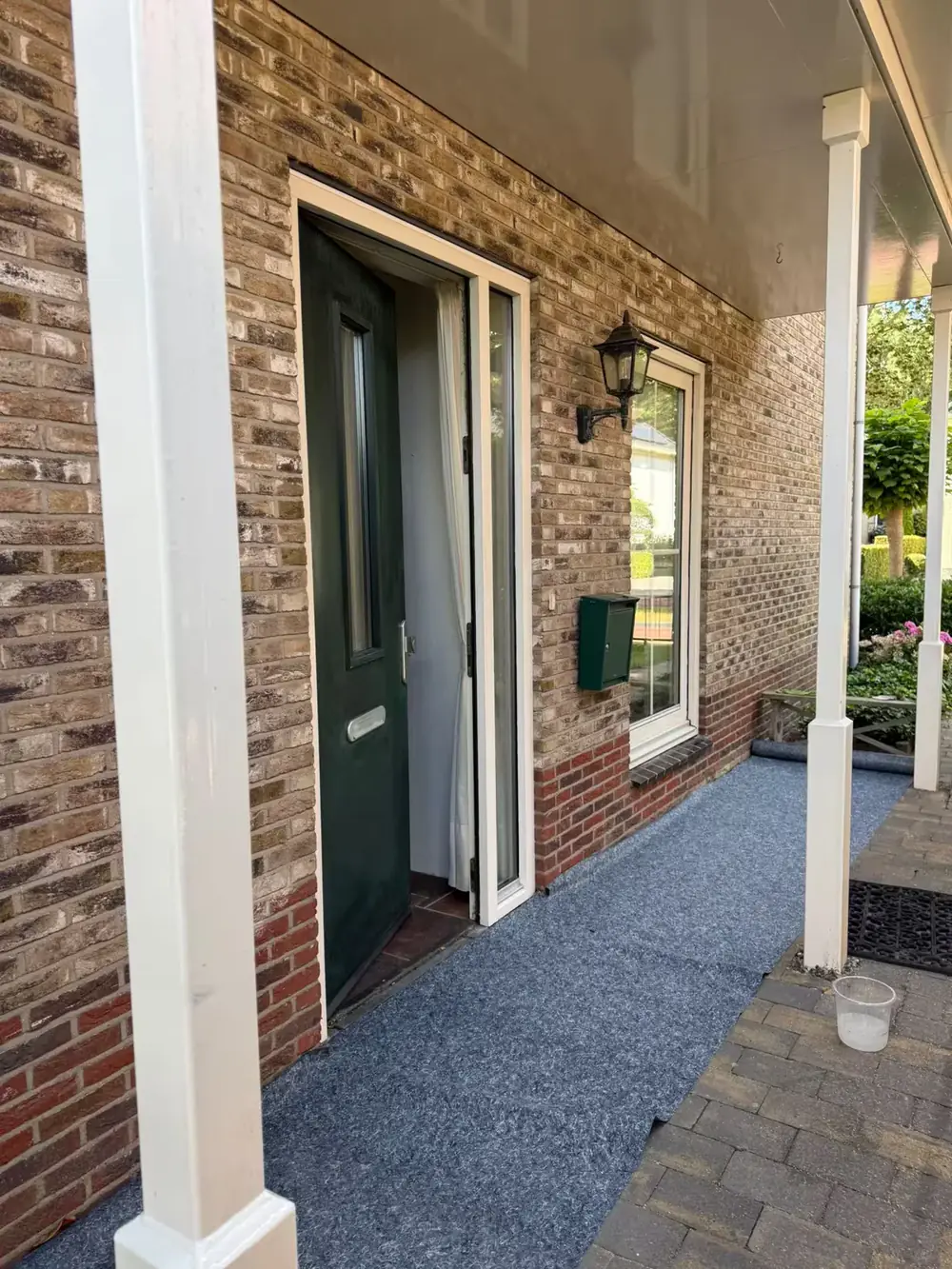
A no-obligation tailored quote in a few clicks. You will soon get a personal reply.
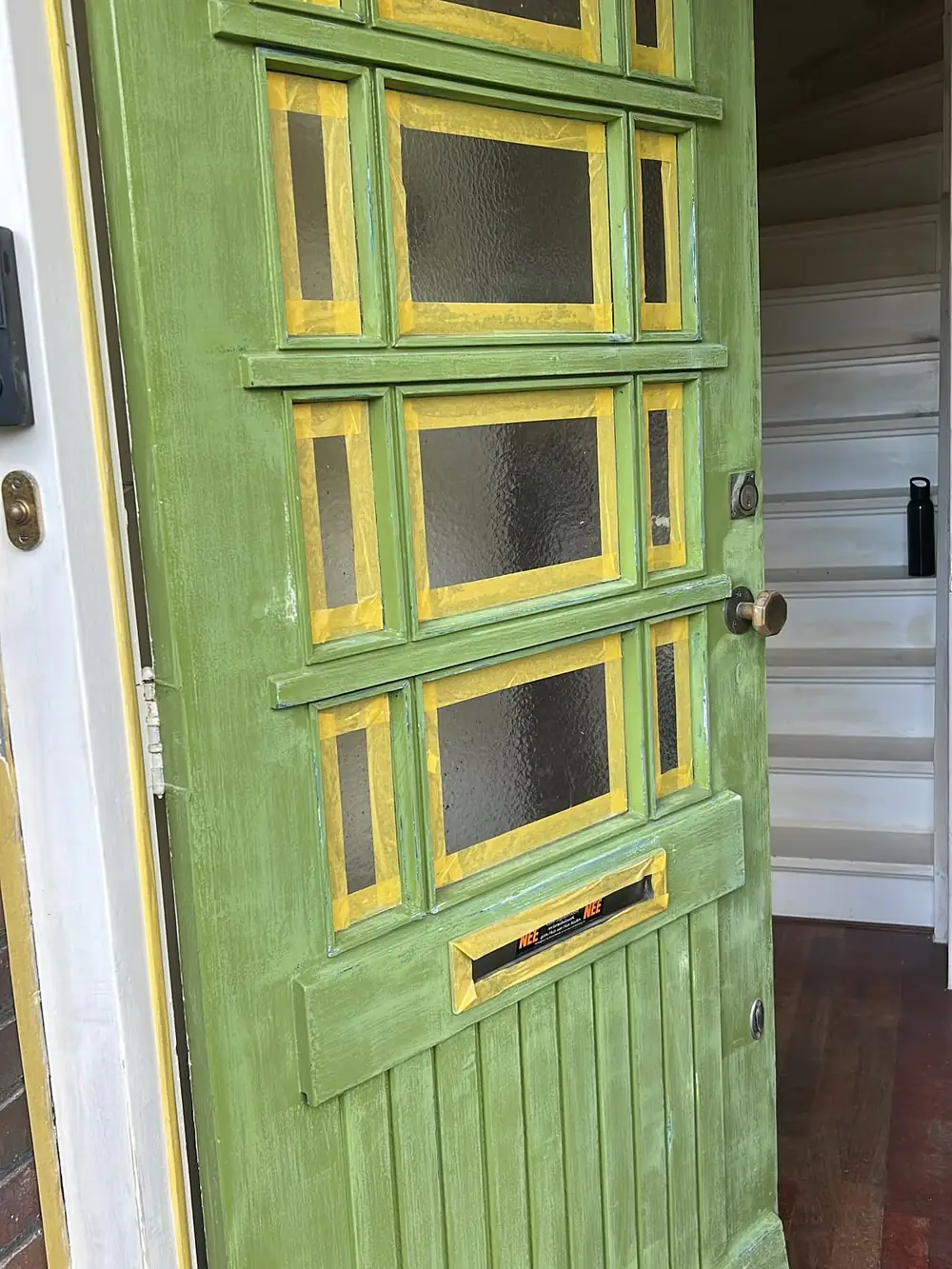
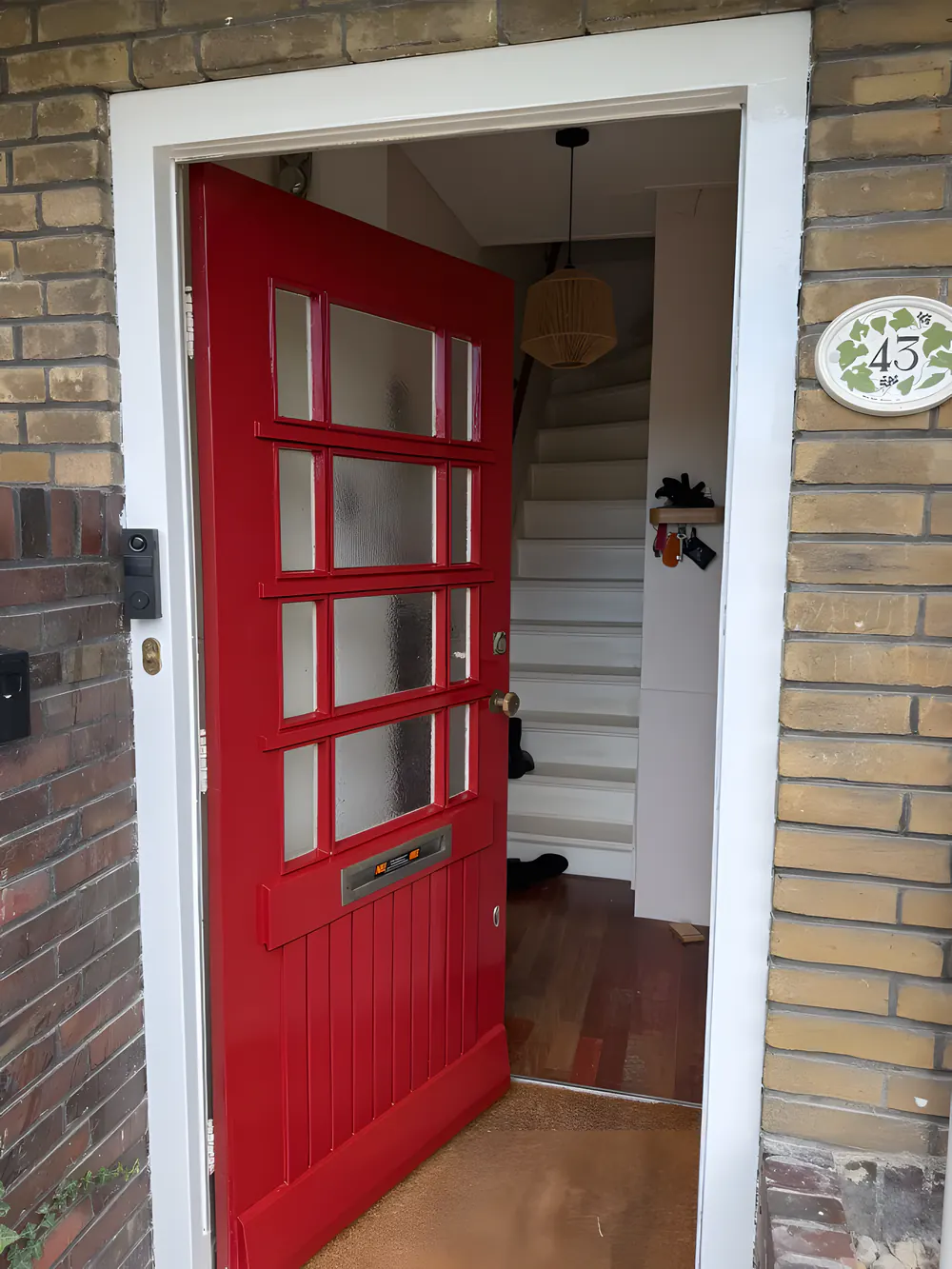 BeforeAfter
Start with what does not change: your brick, pointing and roof. Pick one main colour and at most one accent, and look at the colour on your own facade on a test patch, at different times of day. Check beforehand whether rules apply, as with a listed building or an owners' association (VvE). At MJA we discuss the colour during the site visit.
Updated on 30 October 2026You never choose a colour on its own, but a colour next to something else. Brick, pointing and roof tiles stay where they are, so they decide what is possible. Red or brown brick asks for something different than orange brick or a light facade. Hold the colour you have in mind next to your facade and see whether the brick becomes warmer or just washed out.
So do not start with a colour fan, but with a photo of your house in daylight. Look at which tone in the brick dominates: yellow, red, purple or grey. A white that clashes with it, or a grey that comes out too blue, you will see again on every facade of the house.
On a card a colour looks flatter and darker than on a whole facade, because large surfaces look lighter. On a north facade every shade looks cooler than on the south side, and in the flat Frisian countryside your house often stands open in full light, without trees or neighbours to temper it. With a lot of water nearby, light also bounces back onto the facade.
That is why a test patch is so much better than a picture. Put the colour on a small area, on the facade that is most in view. Look at it in the morning, in the afternoon and in overcast weather, and give it at least a few days.

You are not obliged to anything, but a building style often has its own logic. These are starting points, not rules:
| Type of house | Often fitting | Example from us |
|---|---|---|
| 1930s house | Off-white with a deep green or red accent | Cream White and Antique Green in Langweer |
| Sleeker, more modern look | Anthracite with white | RAL 7016 and RAL 9010 in Sneek |
| Terraced house with pronounced brick | Deep black as a contrast | RAL 9005 on orange brick |
| Timber cladding | Full colour with white edges | Blue facade, white fascia boards |
Most facades look calmer with two colours than with three. Choose a main colour for frames and fascia boards, and an accent for the front door or the windows in one part of the facade. If you really want it to belong to your house, you can take the accent from the brick, the roof or the stained glass.
If you want white, choose a real white: the difference between the shades is bigger than you think, see RAL 9010 or cream white. For dark frames, read what to watch for at anthracite in RAL 7016 and black in RAL 9005. The blue facade in high gloss shows that it can be done differently.
In a terrace, with an owners' association (VvE) or with a listed building, you cannot always decide for yourself what goes on your facade. In an apartment block the colour is often in the association's rules. For a listed building or in a protected village conservation area, the municipality can set requirements, and that can differ per municipality. Ask about that before you order anything.
With a terraced house that has a continuous look it is also handy to have a word with the neighbours. It is not a rule, just easier. More on this is at painting a listed building. If you doubt a rule, the municipality is the best address. We can help think it through, but the permit has to be right before the first coat goes on.
We discuss colours during the site visit, because then we see the real light and the real brick. Still, it helps to send a few things in advance:
In our reviews customers mention our help in thinking about colours. We do that for you too, on your own facade.

A colour change is more than just a different tin of paint. Going from dark to light can need an extra coat to cover, and going from light to dark makes small flaws more visible. Black and anthracite get hotter in the sun, which puts more strain on the paint and the joints. High gloss also shows flaws sooner than satin.
Those extra coats and hours show in the price. As a national market indication, exterior painting starts from €35 per m2, and an exterior frame from €50 each. At MJA you get a fixed price after the site visit, so a colour choice is included beforehand and does not come as a surprise afterwards.
We work with Sikkens, Sigma and Wijzonol, and agree the colour with you by code, so it can be reordered later. That prevents the next job coming out slightly different from the last. On the house in Langweer it became Cream White with Antique Green, a colour scheme that is right at home on a 1930s house.
Mohamed comes by to discuss colours at the site visit. Call or WhatsApp 06 3006 0558, or request a quote and tell us which colour you have in mind. If you have no idea yet, that is fine too.
Send a few photos and your plans. After the site visit you get a fixed quote, with no surprises.
Request a quote Call 06 3006 0558"Clear information about the work on our dormer. Good communication. A partly less successful result was still repaired perfectly."
"Arrived at roughly the agreed time. Friendly introduction. Delivered good work."
"After a small miscommunication at the start, MJA Allround did a fantastic job. The garage was painted. They neatly masked and lightly sanded everything first and used a lovely deep matt black paint."
"Incredibly professional company, helped us out of a tight spot when another contractor had let us down. Arrived within a day and finished the house in 3!"
"Fine company. Skilled and friendly staff. They also give extra tips."
"Delivered a beautiful result and very pleasant communication."
"These really are craftsmen who know their trade. Our house badly needed work, it had not been maintained for 10 years. They explained everything well. Once they started they found a lot of wood rot, it was shocking, but thanks to MJA Allround Bouw our house looks sharp and beautiful again."
"This craftsman delivers quality work. Very happy with the job. Agreements are kept and it was finished within the agreed time."
"I recently got the keys to my new-build flat and three craftsmen applied glass fibre wallpaper and painted everything expertly (about 150 m2)."
"The fascia boards had to be replaced at short notice. MJA Allround Bouw responded very quickly and delivered excellent work. Their advice and communication were also very good."
"Got an appointment quickly and everything went fine. Did good work, the doors look great again."
"Friendly and skilled people came to me and did good work. Thanks again for the beautiful finish of all that painting."
Reviews translated from Dutch. The originals are on Google.
The questions we get most often, with an honest answer.
You can, and in a row that often looks calm. Do keep in mind that the gloss level and the brand can give differences, even if the code looks the same. With an owners' association or a listed building, fixed colours sometimes apply.
Not necessarily, but dark paint gets much warmer in the sun than white. As a result wood and joints move more, especially on the south and west. Good prep work and a closed coat are then extra important.
Big enough to see from the street, and in a spot that catches a lot of light. A small patch on a door or on a loose board also helps, if you can hold it against the facade. We discuss this at the site visit.
Yes, we help think it through during the site visit. We do that on your own facade, with the brick and the light there. The choice stays yours.
Send your plans and a few photos. Mohamed takes a look and you get a fixed quote.
Request a quote Get in touch