★★★★★
"Clear information about the work on our dormer. Good communication. A partly less successful result was still repaired perfectly."

Indoors the choice is quickly made, outdoors the surface, the gloss and that week's weather decide.
A no-obligation tailored quote in a few clicks. You will soon get a personal reply.
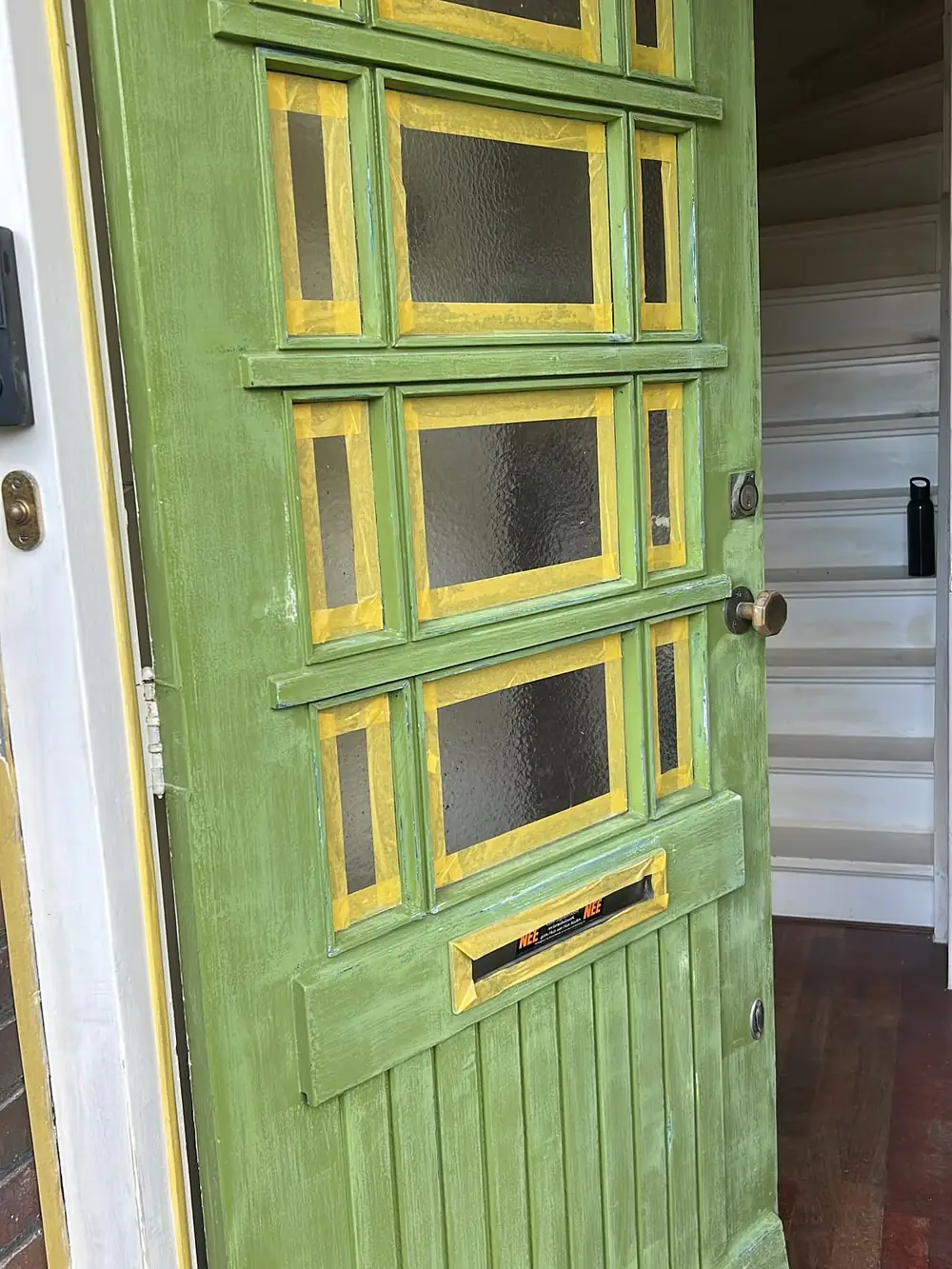
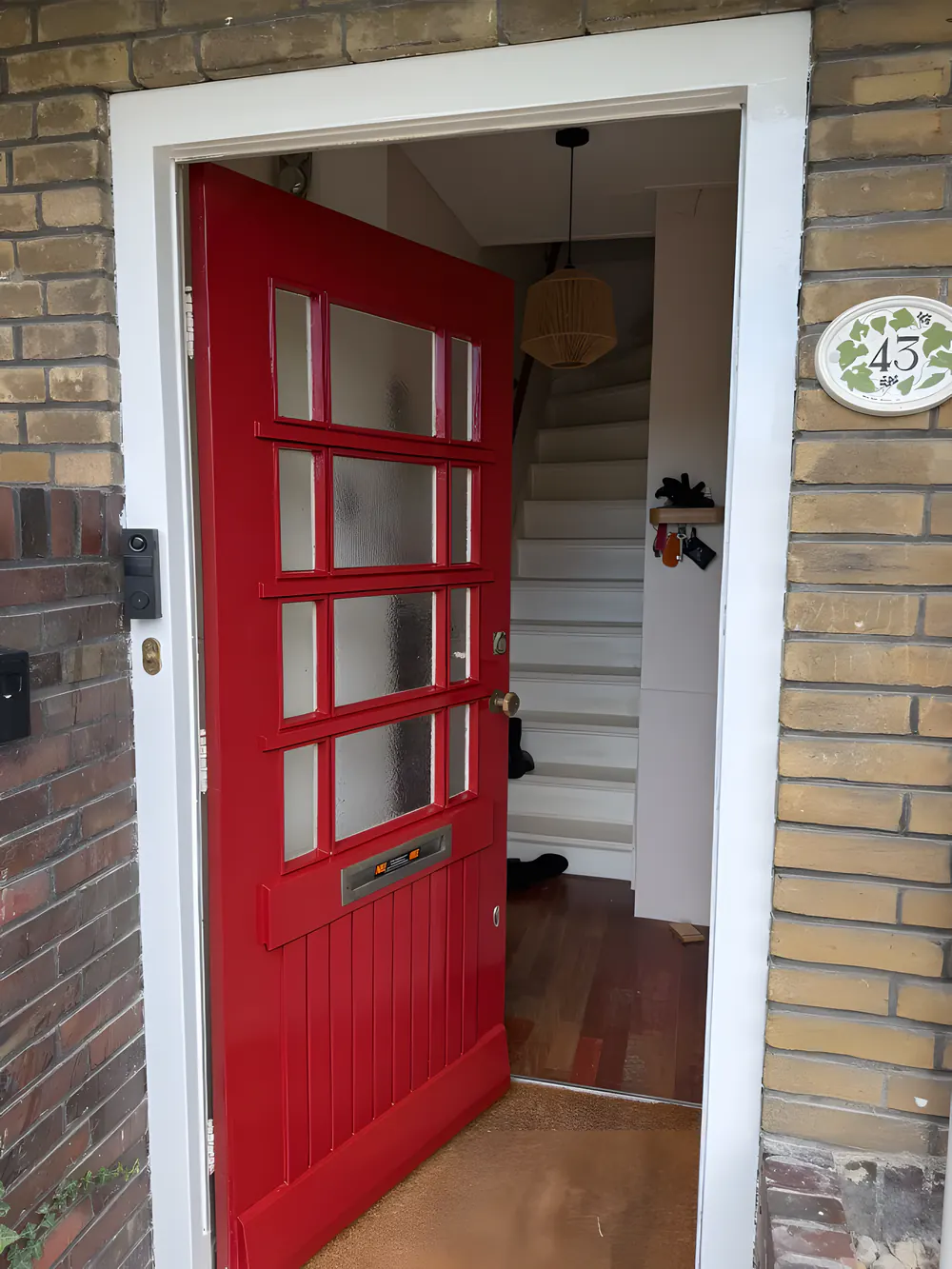 BeforeAfter
Indoors you almost always choose water-based paint, because it hardly smells, dries fast and keeps white from yellowing as quickly. Outdoors it depends on the surface, the gloss you want and the weather. Solvent-based gloss paint has always levelled out more beautifully, while water-based dries faster. Neither rescues poor preparation.
Updated on 30 October 2026Indoors you almost always choose water-based paint: little smell, fast drying and white stays white for longer. Outdoors it is more nuanced. There the surface, the gloss you want, the old paint layer and that week's weather all count. On a front door that has to be crisp in high gloss, levelling weighs heavily. On a window frame that has to be done between two showers, drying time weighs more.
So one type of paint is not better than the other. Both last a long time if the preparation is right, and both let go if the timber was wet or greasy. Anyone who hangs the choice on the tin is looking at the wrong part of the job.
| Property | Water-based | Solvent-based |
|---|---|---|
| Drying | Fast, often two coats in a day | Slower, often one coat a day |
| Levelling | Good, but brush marks show sooner | Very good, gives a smooth mirror |
| White indoors | Hardly yellows | Yellows, especially in dark spots |
| Smell | Mild, the room is usable again quickly | Strong, ventilation is needed |
| Brushes | Rinse out with water | Clean with white spirit |
These are the general lines. The figures vary per product, so the drying time that counts is on the technical data sheet of that one paint.
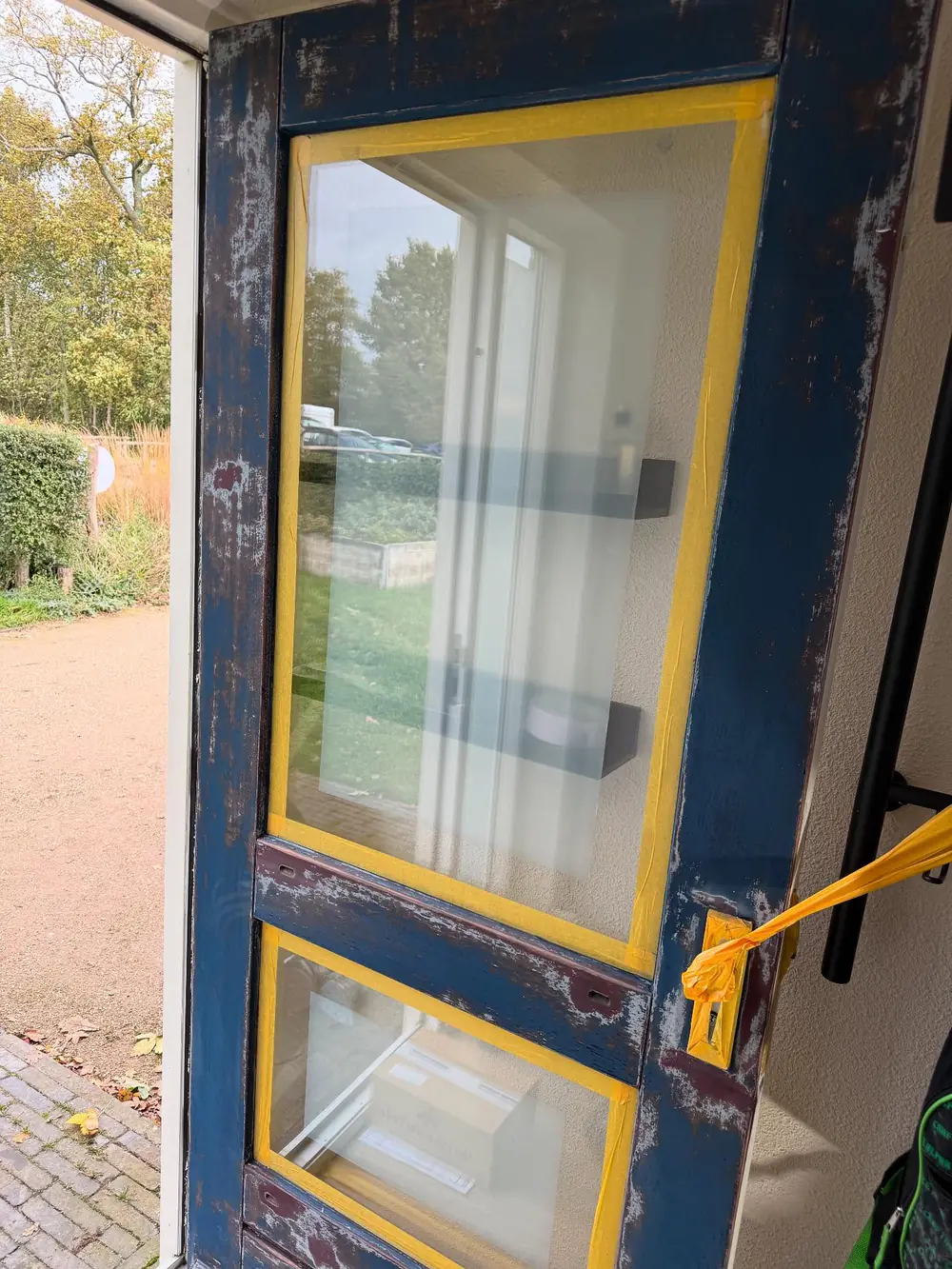
In south-west Friesland the wind often blows from the south-west and water is never far away. In spring and autumn timber stays wet from the dew for a long time in the morning. That affects both types of paint, but in a different way. Water-based gloss needs warmth and dry air to form a good film; on a cold, damp evening that film can end up weaker. Solvent-based paint stays open for longer, so dirt and fluff from the air blow into it more easily.
As a rule of thumb we paint outside between 5 and 30 degrees, at a humidity of no more than 85 percent and on dry timber. How often that works out you can see per month on our page about painting weather in Friesland. By the waterside it works out differently from inland, which is why we look at the schedule separately for each house.
It can, provided the old layer is well bonded and has been sanded matt. Old high gloss is so smooth that a new coat cannot grip it. So first degrease, then sand, and where needed a bonding primer. Skip that, and after a season you can scratch the new paint off the door with your fingernail.
The other way round is possible too, although the result then yellows faster indoors. With older houses also watch out for what is underneath. White lead has been banned indoors since 1939 and outdoors since 2009, so a 1930s window frame may still carry layers of it. If in doubt we do not sand dry; read our explanation of old paint with lead.
White solvent-based gloss yellows fastest where little daylight comes in: behind a cupboard, on an interior door in the hallway, on the underside of a staircase. That is why a door sometimes looks cream after a few years while the skirting next to it still looks white. Outdoors this matters much less, because sunlight actually works against the process. There what counts is mainly how long the gloss and the colour hold.
Indoors, water-based is the norm in our trade for another reason too: you do not breathe in solvents, and neither do the residents. For a bedroom or a home that stays occupied, that is the deciding factor for most people. If you choose a colour close to white, you notice that difference first.
Paint advice from the sofa does not work, but with a few photos we get quite far. Send us:
We make the final choice at the site visit, once we have looked at the surface.
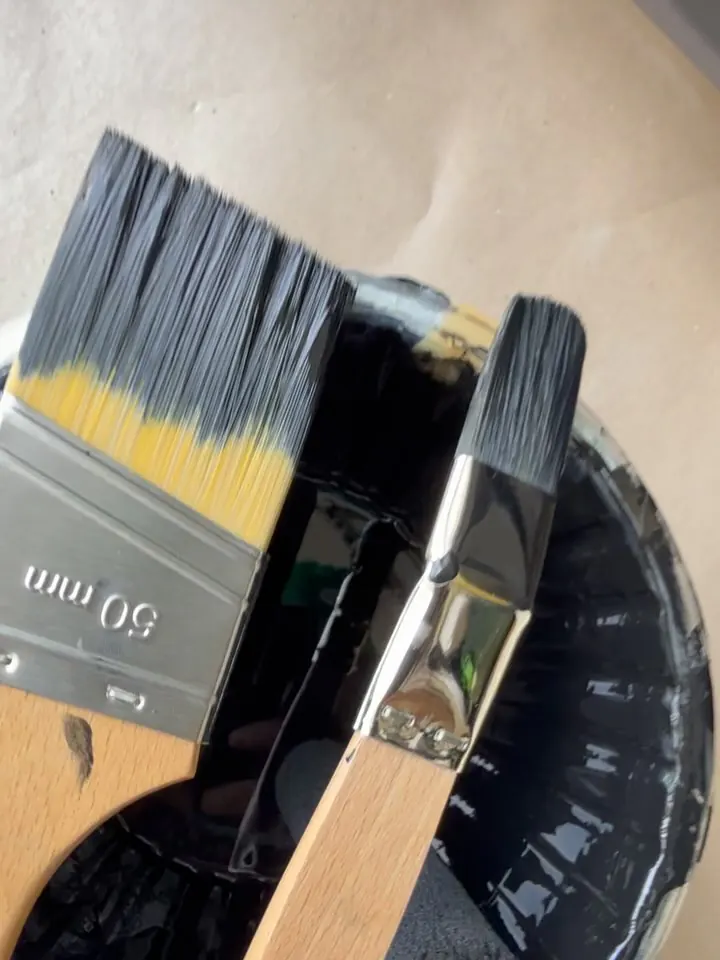
The difference between two types of paint is usually small across the whole job. The hours make up the bill: sanding, filling, sealing, priming and two topcoats. A water-based system can save a day because the coats follow each other faster. On the other hand, a crisp high gloss needs more preparation, whatever the paint.
As a national market indication exterior painting starts from €35 per m2 and interior painting from €25 per m2. With us you get a fixed price after the site visit with the agreed paint on the quote, so you know exactly what goes on your woodwork. How those amounts come about you can read at what a painter costs.
We work with Sikkens, Sigma and Wijzonol and choose per job, not out of habit. Mohamed first looks at the timber: is it sound, is it dry, what is already on it? Then the gloss and the colour come up, and only then the product. That choice is in the quote, so you do not have to ask afterwards what was used.
In their Google reviews, together good for 4.8 from 25 ratings, customers often mention the honest advice. Unsure what suits your window frames or walls? Send a few photos through the quote page or WhatsApp, and we will look along and plan a site visit.
Send a few photos and your plans. After the site visit you get a fixed quote, with no surprises.
Request a quote Call 06 3006 0558"Clear information about the work on our dormer. Good communication. A partly less successful result was still repaired perfectly."
"Arrived at roughly the agreed time. Friendly introduction. Delivered good work."
"After a small miscommunication at the start, MJA Allround did a fantastic job. The garage was painted. They neatly masked and lightly sanded everything first and used a lovely deep matt black paint."
"Incredibly professional company, helped us out of a tight spot when another contractor had let us down. Arrived within a day and finished the house in 3!"
"Fine company. Skilled and friendly staff. They also give extra tips."
"Delivered a beautiful result and very pleasant communication."
"These really are craftsmen who know their trade. Our house badly needed work, it had not been maintained for 10 years. They explained everything well. Once they started they found a lot of wood rot, it was shocking, but thanks to MJA Allround Bouw our house looks sharp and beautiful again."
"This craftsman delivers quality work. Very happy with the job. Agreements are kept and it was finished within the agreed time."
"I recently got the keys to my new-build flat and three craftsmen applied glass fibre wallpaper and painted everything expertly (about 150 m2)."
"The fascia boards had to be replaced at short notice. MJA Allround Bouw responded very quickly and delivered excellent work. Their advice and communication were also very good."
"Got an appointment quickly and everything went fine. Did good work, the doors look great again."
"Friendly and skilled people came to me and did good work. Thanks again for the beautiful finish of all that painting."
Reviews translated from Dutch. The originals are on Google.
The questions we get most often, with an honest answer.
On well-prepared timber, modern water-based gloss paints also last a long time outdoors. The differences between products are bigger than those between the two types. Poor preparation costs you more lifespan than the paint choice.
As a private person you can still buy it, but you bring fumes and yellowing into your home with it. We recommend water-based paint indoors, certainly in a home that stays occupied.
That paint dries quickly and so has less time to level out. In warm weather or a draught it gets worse. So work with a good brush and a calm pace, and do not go back over a surface once the paint is already pulling.
That is hard to see from outside. Yellowing on white interior doors points to solvent-based paint. At the site visit we test how the old layer reacts and how well it is still bonded.
Send your plans and a few photos. Mohamed takes a look and you get a fixed quote.
Request a quote Get in touch