★★★★★
"Clear information about the work on our dormer. Good communication. A partly less successful result was still repaired perfectly."

The topcoat is what you see, but the prep decides whether that coat stays on for years or lets go after a few winters.
A no-obligation tailored quote in a few clicks. You will soon get a personal reply.
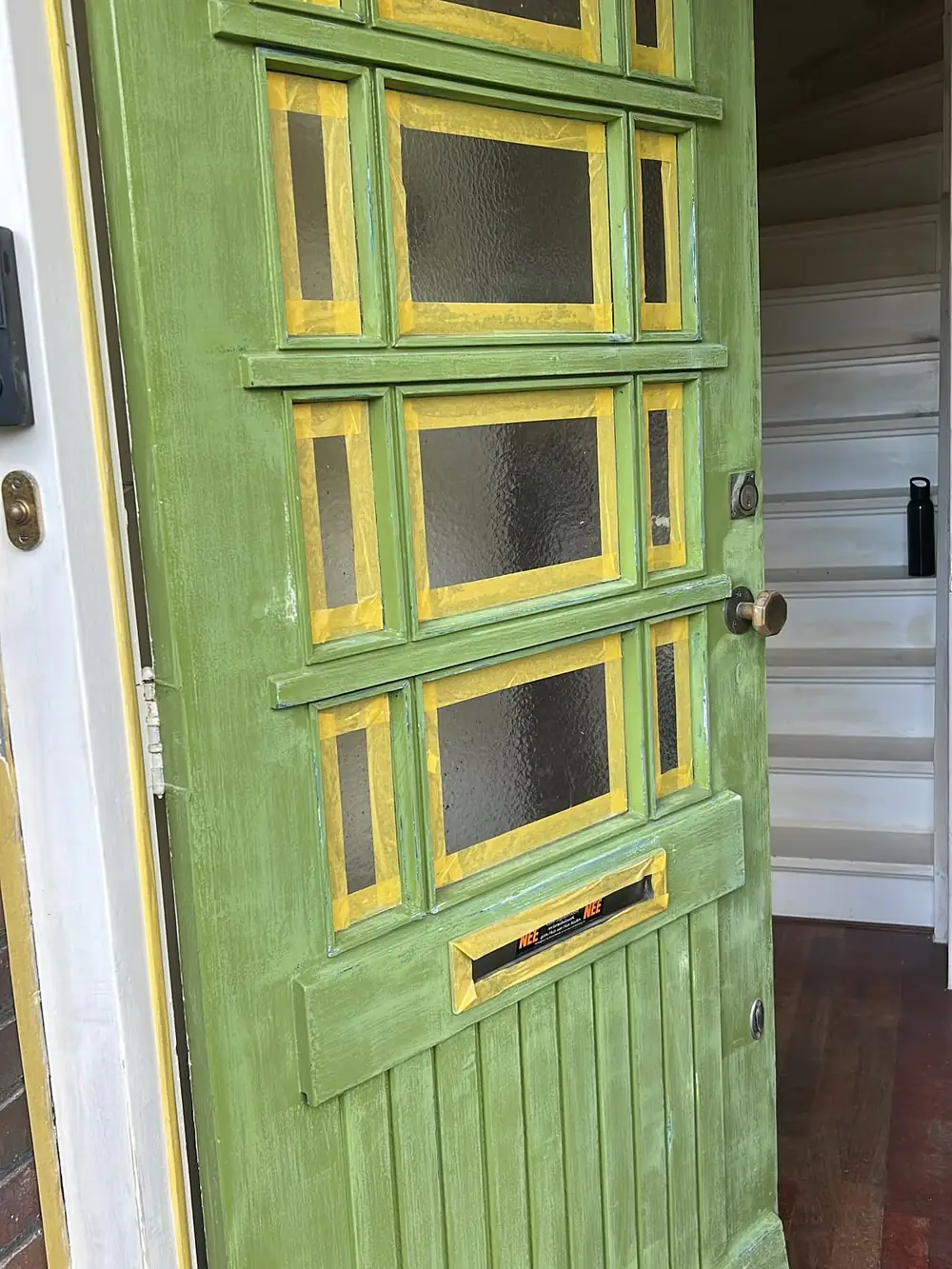
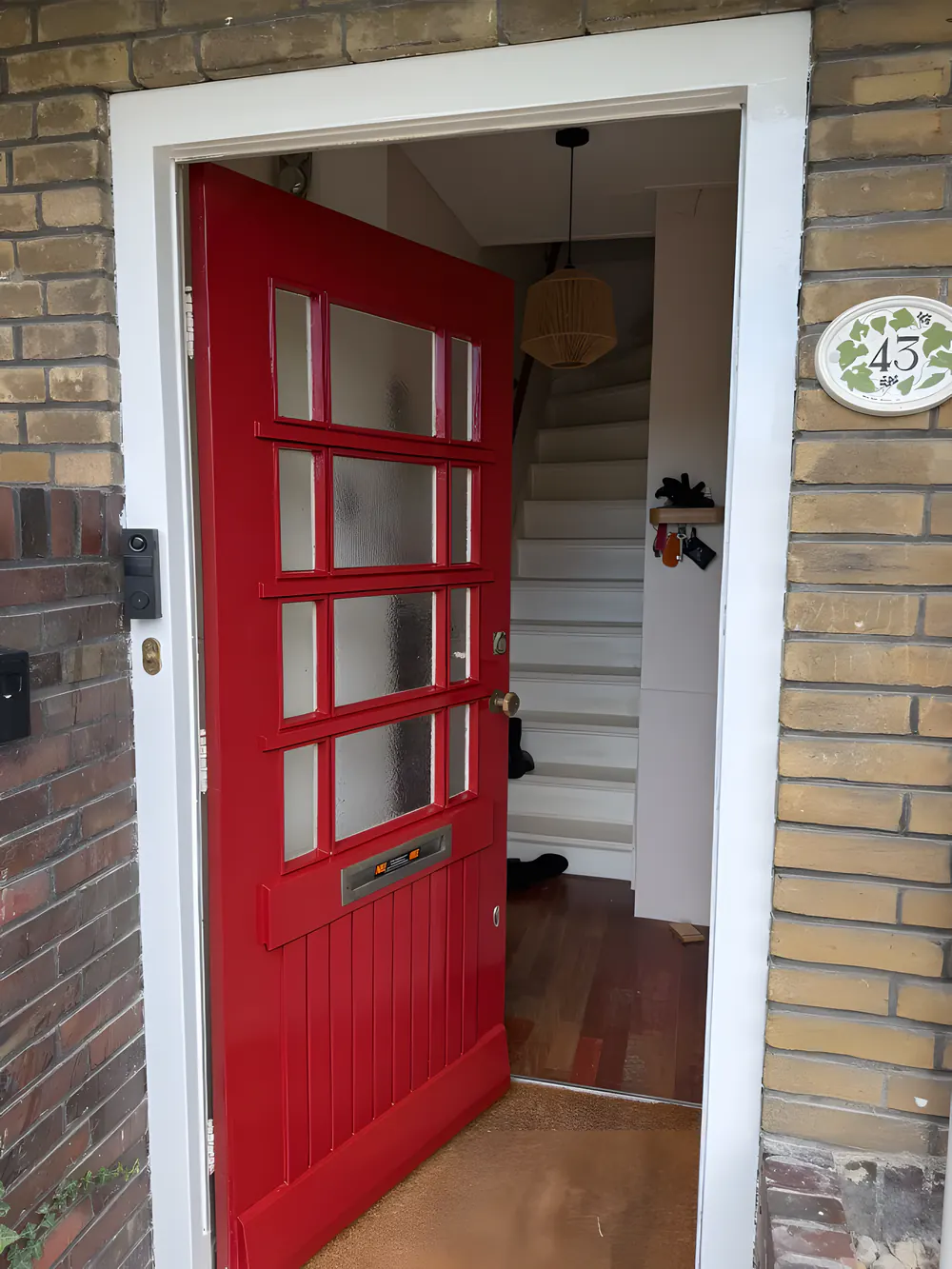 BeforeAfter
Good prep consists of degreasing, sanding, priming, filling, sealing and two topcoats. Each step has its own job: adhesion, a flat substrate and a closed coat against water. Skip one and the paint lets go sooner. That is why paintwork has more time in the preparation than in the last coat.
Updated on 30 October 2026A painter can make a frame look good in two hours, and in that case the paint also comes off again quickly. Paint only bonds well to a clean, dry, sanded substrate. Grease from hands, dirt, loose paint and wet wood are all reasons why a new coat lets go within a few years. You do not see that at completion, because then everything still looks good.
This is also why two quotes can be so far apart. The difference is often not in the paint but in the hours before it. So always ask which steps are in the price. Comparing painters' quotes helps you with that.
| Step | What happens | Why |
|---|---|---|
| Degrease | Dirt and grease off | Otherwise you sand the grease in |
| Sand | Loose paint off, surface roughened | Gives the paint a grip |
| Prime | Primer on bare wood | Adhesion, protects bare spots |
| Fill | Small flaws filled | Flat finish under the topcoat |
| Seal | Joints closed | No water in the joint |
| Two topcoats | Two finish coats | Closed, even coat |
Between the coats we sand lightly and the paint gets the drying time given on the technical data sheet. That waiting time is not lost time: topcoat on a coat that is not dry yet wrinkles or lets go later.
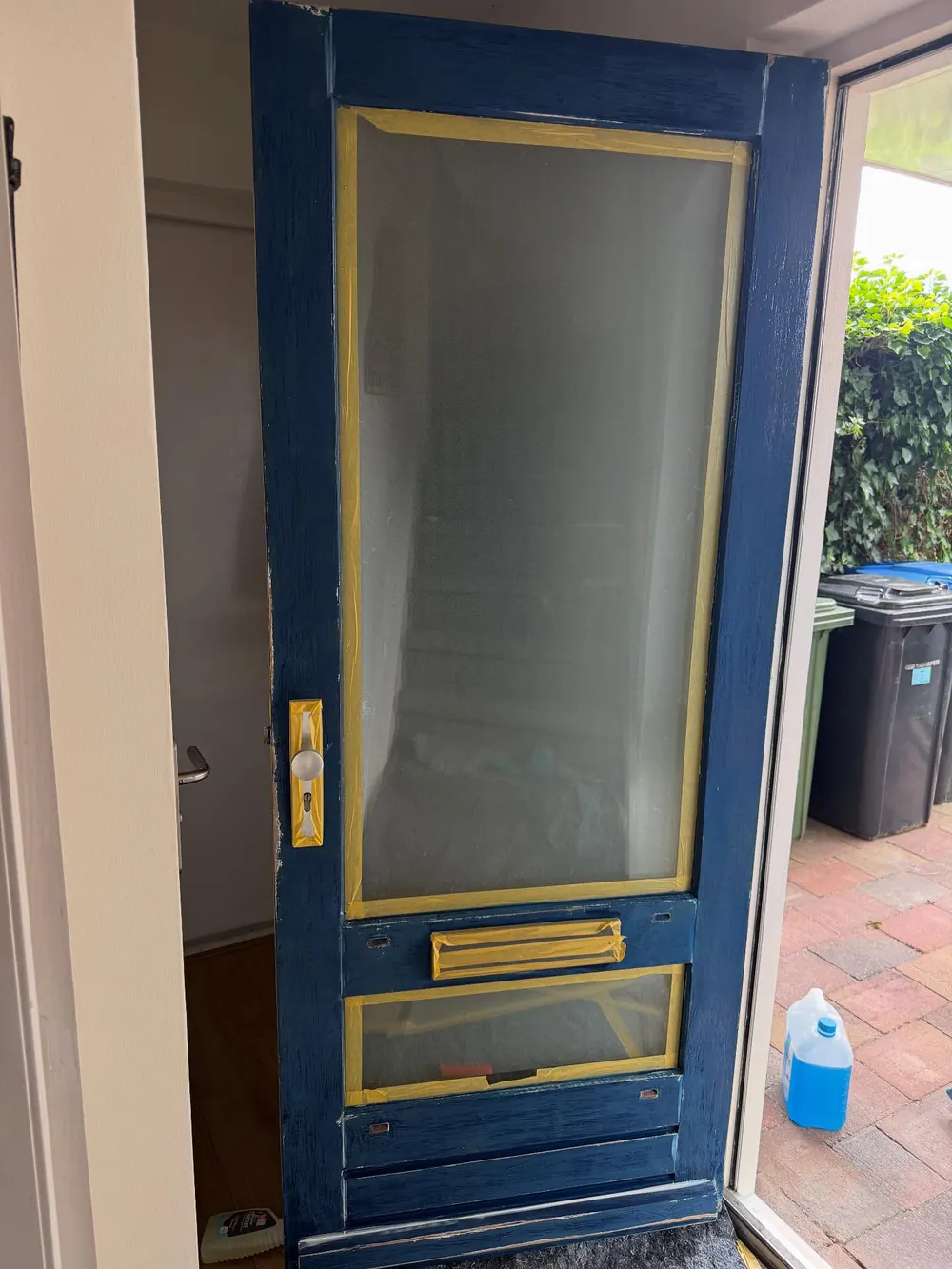
We sand with Festool and work up through grit 150, 180 and 240. Coarse where paint has to come off or wood has to be flattened, finer as the coat gets closer. Wood sanded too coarse shows through the topcoat as streaks, especially in high gloss. Sanding too fine gives the primer less grip.
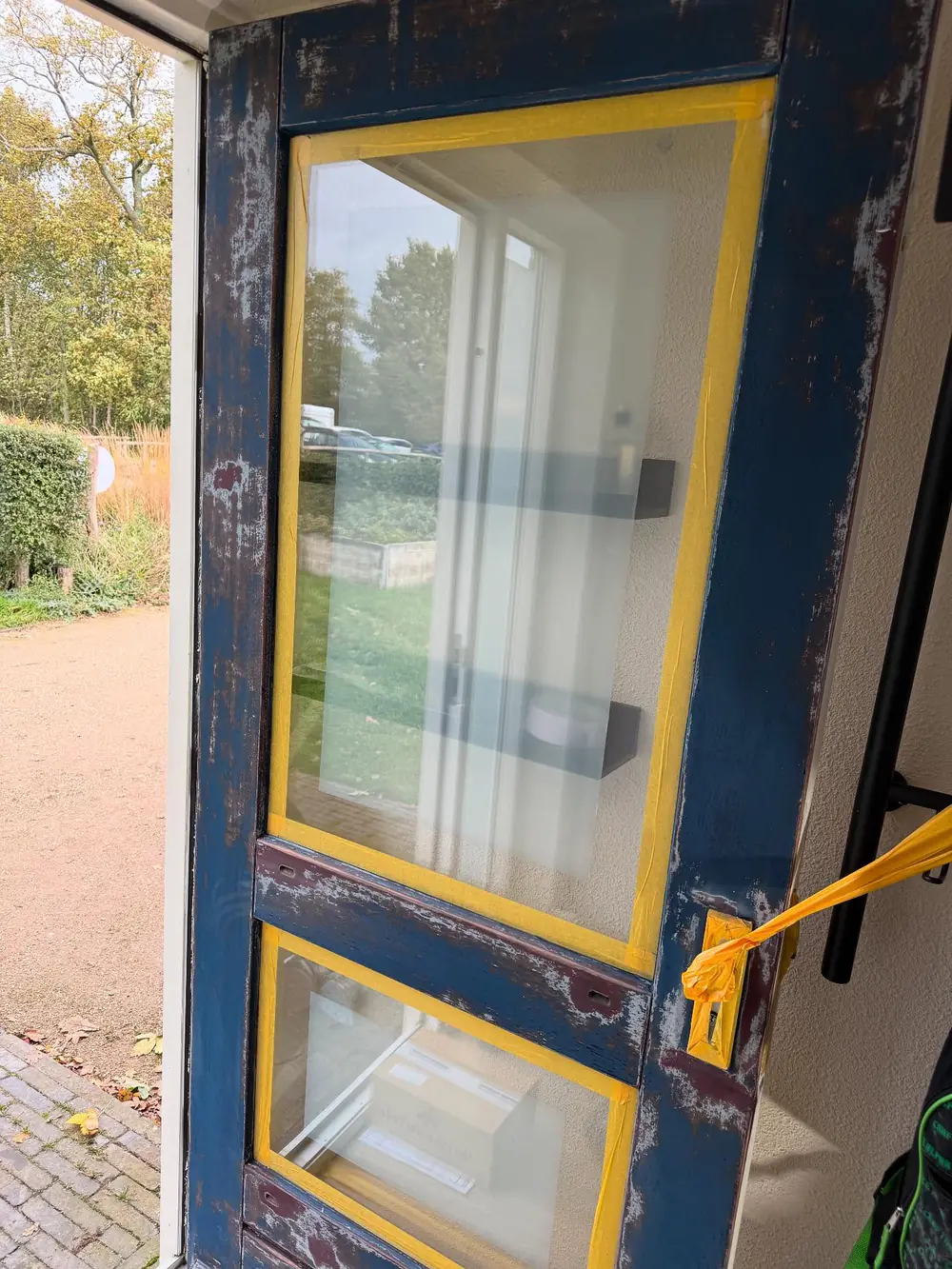
We also want to feather edges and transitions well, so an old paint layer does not stay visible as a step. On profiles and glazing bars we do a lot by hand, because the machine cannot reach there. On the front door and other doors you see up close every day, this takes the most time. You can see that attention straight away at the exterior doors in Bolsward.
Sanding is not always safe. Old paint can contain lead. White lead paint has been banned indoors since 1939 and outdoors since 2009, according to OnderhoudNL. On older houses in Friesland it can therefore still be present in the bottom layers, especially on frames and doors that were never stripped completely.
If in doubt, we do not sand dry, because you do not want that dust in the house or the garden. Then we choose a method that produces no dust. If you have an older house, or do not know what is on your frames, read what you need to know about lead in old paint before you pick up the sander yourself.
We only prime where it is needed: on bare wood, on repairs and on spots where the old paint has been removed. We use Sikkens Primer Extra and Primer Express, and we also choose based on what goes on top. On some doors a double primer coat goes on: in Bolsward there were two coats of Primer Express under the Rubbol Satura 9010.
On other material, such as Trespa, we first look at the pretreatment. Trespa can be painted, but only if it is cleaned and sanded properly. For the difference between the paint types that follow, read water-based or turpentine-based.
How much prep is needed is not something you decide from a distance. We still like to look along in advance, so this is handy to send:
At the site visit we look at the substrate and agree what goes in the quote.
Prep is labour, and that lands on the hourly rate. Nationally that hourly rate is from €30 inside and from €40 outside, and exterior painting costs from €35 per m2 as a market indication. The worse the condition of the old paint, the more of those hours go on sanding and repairing.
What helps the most is starting in time: a closed, dull coat is finished faster than flaking paint. Colour changes and high gloss ask for more too: high gloss shows flaws sooner, so then we sand finer. If bad paint was painted over before, that has to come off first before it makes sense to carry on. After the site visit you get a fixed price from us with the agreed work, so no surprises afterwards.
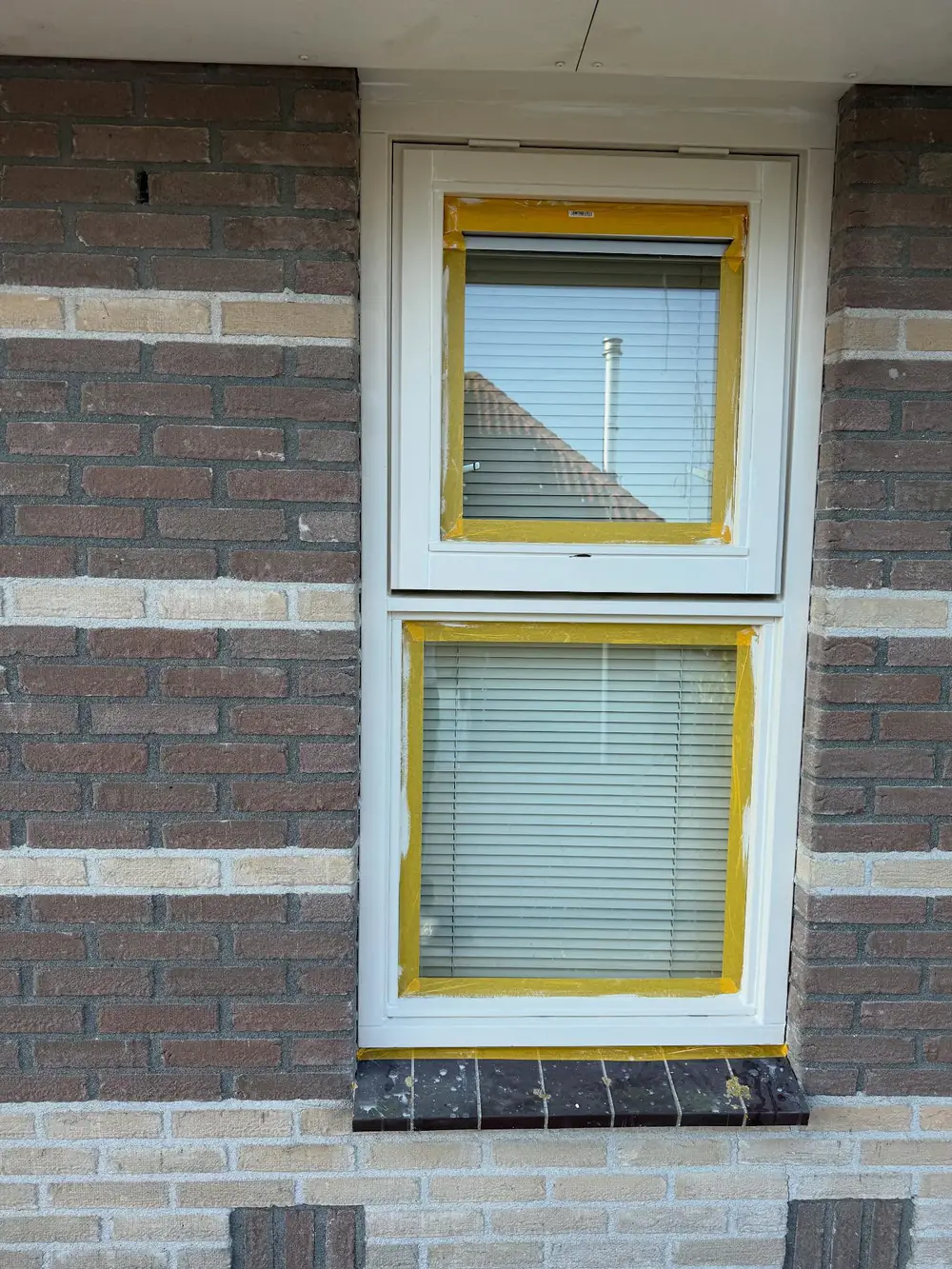
In photos of our work you can see the in-between stages: taped-off windows, primer on the wood, sanded doors. We show that because that is where the difference lies. In their reviews customers also mention the neat taping off and the clear communication.
Want this on your house? Call or WhatsApp Mohamed on 06 3006 0558, or request a quote. More about the whole approach is at exterior painting in Friesland. You get a quote from us in which every step is named, so you know what happens before the last coat goes on.
Send a few photos and your plans. After the site visit you get a fixed quote, with no surprises.
Request a quote Call 06 3006 0558"Clear information about the work on our dormer. Good communication. A partly less successful result was still repaired perfectly."
"Arrived at roughly the agreed time. Friendly introduction. Delivered good work."
"After a small miscommunication at the start, MJA Allround did a fantastic job. The garage was painted. They neatly masked and lightly sanded everything first and used a lovely deep matt black paint."
"Incredibly professional company, helped us out of a tight spot when another contractor had let us down. Arrived within a day and finished the house in 3!"
"Fine company. Skilled and friendly staff. They also give extra tips."
"Delivered a beautiful result and very pleasant communication."
"These really are craftsmen who know their trade. Our house badly needed work, it had not been maintained for 10 years. They explained everything well. Once they started they found a lot of wood rot, it was shocking, but thanks to MJA Allround Bouw our house looks sharp and beautiful again."
"This craftsman delivers quality work. Very happy with the job. Agreements are kept and it was finished within the agreed time."
"I recently got the keys to my new-build flat and three craftsmen applied glass fibre wallpaper and painted everything expertly (about 150 m2)."
"The fascia boards had to be replaced at short notice. MJA Allround Bouw responded very quickly and delivered excellent work. Their advice and communication were also very good."
"Got an appointment quickly and everything went fine. Did good work, the doors look great again."
"Friendly and skilled people came to me and did good work. Thanks again for the beautiful finish of all that painting."
Reviews translated from Dutch. The originals are on Google.
The questions we get most often, with an honest answer.
Yes, even a good coat has to be sanded lightly. Without that roughness the new paint bonds badly. With a good coat it does take much less time.
You can, but then the quality of the substrate is down to you and that affects the whole paint job. Discuss it in advance and we will see what is possible. With old paint that may contain lead we advise against it.
That depends on the condition and the number of profiles. A simple frame with a good coat is quickly done, an old window with glazing bars and rot takes far more time. So we do not give a fixed duration per piece.
The primer raises the wood fibres and is not completely smooth. Light sanding between coats gives a flat base under the topcoat. You see the result mostly with glossy coats.
Send your plans and a few photos. Mohamed takes a look and you get a fixed quote.
Request a quote Get in touch